
Xenia Lodge #49
Meets First Monday at 7:00 PM
Meets First Monday at 7:00 PM
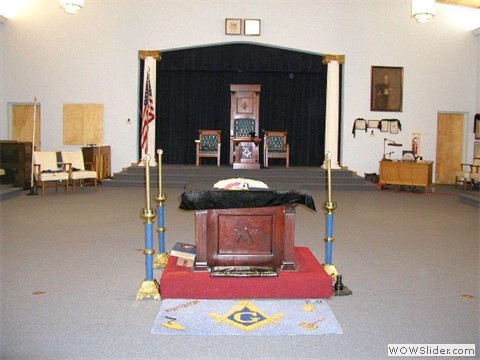
The history of Masonry in Greene county dates back nearly one hundred years, although there can be no doubt that some of the settlers who were living in the county on the day it was organized in 1803 were members of the craft. While the formal organization of the first lodge at Xenia occurred on March 6, 1819, the initial steps in its organization has taken place sometime in December of the preceding year. In that month a number of the Masons, residents of Xenia and the surrounding community, decided to apply for a charter and the records of the grand lodge show that on December 31, 1818, a petition was presented to the grand lodge at Columbus signed by a group of seven Greene county Masons, Joshua Martin, William F. Elkins, John Smith, Amasa Read, Abner Read, Orestus Roberts and Caleb West. The grand lodge on the last day of 1818 granted a dispensation to these petitioners, the dispensation bearing the signature of Chester Griswold, grand master of the state of Ohio. Pursuant to the authority granted by the dispensation the local lodge met and organized on March 6, 1819, with the following officers: Joshua Martin, worshipful master; John Smith, senior warden; Caleb West, junior warden; Abner Read, secretary; Amasa Read, senior deacon; John Martin, junior deacon; John Houghton, tyler. It was not until December 19, 1819, that the grand lodge of the state issued the charter under which the lodge still works. This charter bears the signature of A. McDowell, senior grand warden; Joseph Vance, junior grand warden; Benjamin Gardiner, grand secretary; John Snow, grand master.
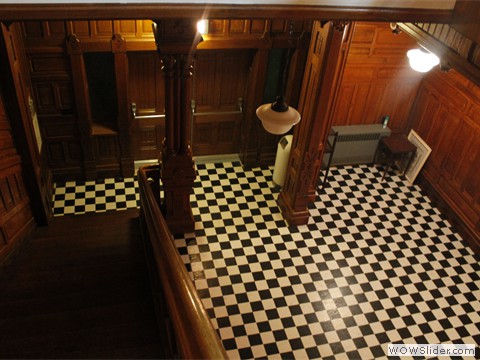
A complete history of the lodge can never be written, owing to the fact that on January 23, 1882, the building then occupied by the lodge was completely destroyed by fire, the lodge losing all of its property, paraphernalia and records. From various sources, including a brief history of the lodge compiled in 1897 by a committee appointed for the purpose, the facts contained in the present article have been compiled. The first work of the lodge bears the date of April n, 1819, at which time Clark Williams was initiated as an entered apprentice. The lodge grew in membership and influence from year to year until the famous Morgan episode happened. The history of the Anti-Masonic movement in the United States is a part of the history of our country, a movement which developed a political significance resulting in several states having a so-called Anti-Masonic party, with candidates for state and county offices. The climax of the movement came when it actually proposed a candidate for President of the United States in 1831. The Xenia lodge was one of the thousands of local lodges throughout the United States that was compelled to suspend its activities for a time. It appears from the best authority that the local lodge suspended its regular sessions with the meeting of March 26, 1831, and that it did not again meet in regular session for more than fifteen years. At least the next record of a meeting in Xenia is dated August 13, 1846. It will probably never be known what the local lodge did during this fifteen years. There are well-authenticated records that meetings were held, however, from time to time, irregular though they must have been, at the home of Abner Read in Oldtown. Read was a merchant in that village, and, it is known, was also engaged in the manufacture of large wall clocks. He was a twin brother of Amasa Read, both brothers being charter members of the lodge. There were a number of brethren who, from every indication, must have been received into the lodge during this period from 1831 to 1846, and it is more than likely that they were given the work in the second story of Read's house in Oldtown. Among the number who are thought to have been received during this period are the following: Abraham Hivling, William E. Stark, William Bell, Hiram Brown, Adam Hupp, M. Chambers, Simon Dunn, John A. Gowdy, John A. Hivling, J. M. Collier, Charles Anthony, George Champley and Andrew Ream. The first worshipful master to appear in 1846 after the resumption of labor was John Hivling, and it is presumed that he was one of the number received into the lodge during this hiatus in its history.
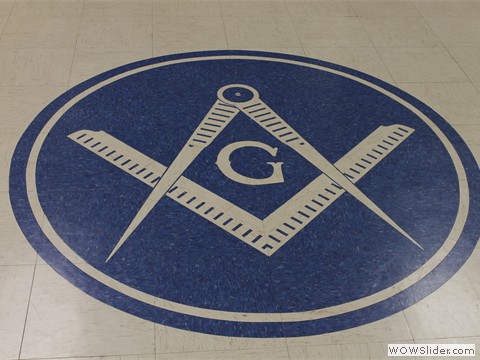
With the resumption of the work of the lodge in 1846 there was a great revival of interest. It is interesting to note that the first work done after the lodge again resumed labor, September 9, 1846. was to confer the master Mason's degree upon Henry Kealhoffer, who had received the first two degrees in March, 1831, and now, fifteen years later, received the third and last degree of the blue lodge. About this time, a special convocation was held in Xenia, which lasted from high twelve, Monday, to high twelve, Saturday, of the same week. The Hon. Thomas Corwin, of Lebanon, presided during the week as worshipful master. During the week no fewer than seventeen candidates were entered, passed and raised, several being from Waynesville, Lebanon and Wilmington. Such a week Masonry has not since known in Greene county.
Nearly three-quarters of a century have now elapsed since the Xenia lodge resumed its work, and these years have seen other lodges organized in the county, the local lodge having contributed of its membership to their respective lists of charter members. The charter members of the lodges at Jamestown, Yellow Springs, New Burlington and Cedarville were in many cases members of the Xenia lodge. Other branches of Masonry have been established in Xenia, all of which owe their existence to this parent lodge. Scores of members of Xenia Lodge No. 49 have been found in places of public trust and honor. Its sons have been seen in the Assembly of the state.
in the halls of Congress, on the judicial bench, and within the sacred walls of the church. They have been prominent in all the various phases of the life of the community, and wherever found they have tried to live up to the high teachings of the oldest fraternal organization in the world.
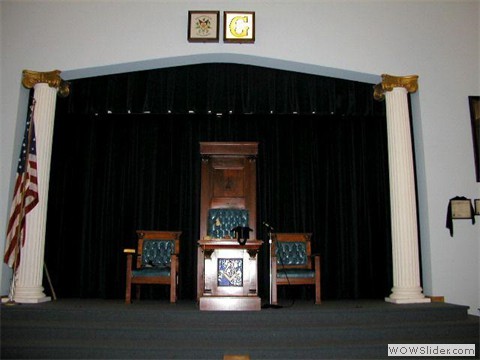
The lodge has had its quarters in the Steele building at the northwest corner of Detroit and Main streets since the latter part of 1896. It occupies the fourth and fifth floors of this building and has its quarters fitted up in a sumptuous manner. When it became known that the local lodge would be ready in the winter of 1896 to occupy its new home, it extended an invitation to the grand lodge of the state to be present at its dedicatory services. Accordingly, the grand lodge of the state of Ohio convened in emergent session for the purpose of dedicating the new rooms of the local lodge on Monday, December 28, 1896 (A. L. 5896), in a room adjacent to that of Xenia Lodge No. 49, with officers in attendance from across Ohio. After the craft had been called to order, a procession was formed and proceeded to the new lodge room where the dedicatory services were fittingly observed in due form. A large number of visiting Masons were present from Dayton, Yellow Springs, Jamestown, Waynesville and New Burlington. In the evening of the same day an entertainment was given by the local lodge in their new quarters. Two hundred and nine guests were present and were well entertained. The worshipful master, Mansel J. Hartley, then read a history of the local lodge, the same from which the main facts of this present article are taken.